
What exactly is community immunity?
Community immunity happens when enough people in a community are protected from a contagious disease through vaccination or previous illness (getting vaccinated is always safer) so that the disease can’t spread easily. When you reduce the number of people who are susceptible to infection, you limit the ability of the disease to spread. Community immunity protects those who can’t be vaccinated, like newborns or people with certain medical conditions.
NO HERD IMMUNITY
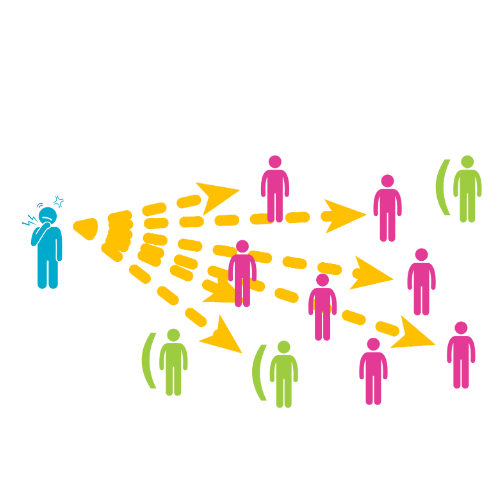
When there are too few people in a community who are vaccinated, a disease can spread.

Contagious

Susceptible (not
immunized)

Immunized
HERD IMMUNITY
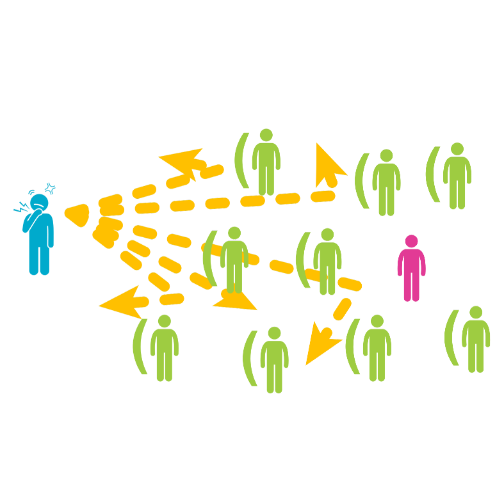
Because of age, health conditions, or other factors, some people cannot get certain vaccines. They rely on us to protect them.
Another way to understand this idea:
NO HERD IMMUNITY
If too few people are immune, a disease can spread quickly.
HERD IMMUNITY
When enough people are immune, the disease has nowhere to go. The immunized people act like a protective shield for the whole community.
- Mumps: 75-85%
- Polio: 80-86%
- Diphtheria: 85%
- Rubella: 83-85%
- Pertussis (whooping cough): 92-95%
- Measles: 83-94%

… it takes a high percentage of immune people to make community immunity work, it does work. It protects those who cannot be immunized and are most at risk—and keeps outbreaks from happening in the first place.

© Voices for Vaccines. Excerpts and links may be used by websites and blogs, provided that full and clear credit is given to Voices for Vaccines, with appropriate and specific direction and links to the original content. Parents, providers, advocates, and others may download and duplicate toolkits in print, without alteration, for non-commercial use and with full and proper attribution only.
