by Sonia Kirby
It’s a sad irony that I was asked to share my family’s experience with measles on the day that Canada announced it had lost its measles elimination status. It now feels more important than ever to share our story.
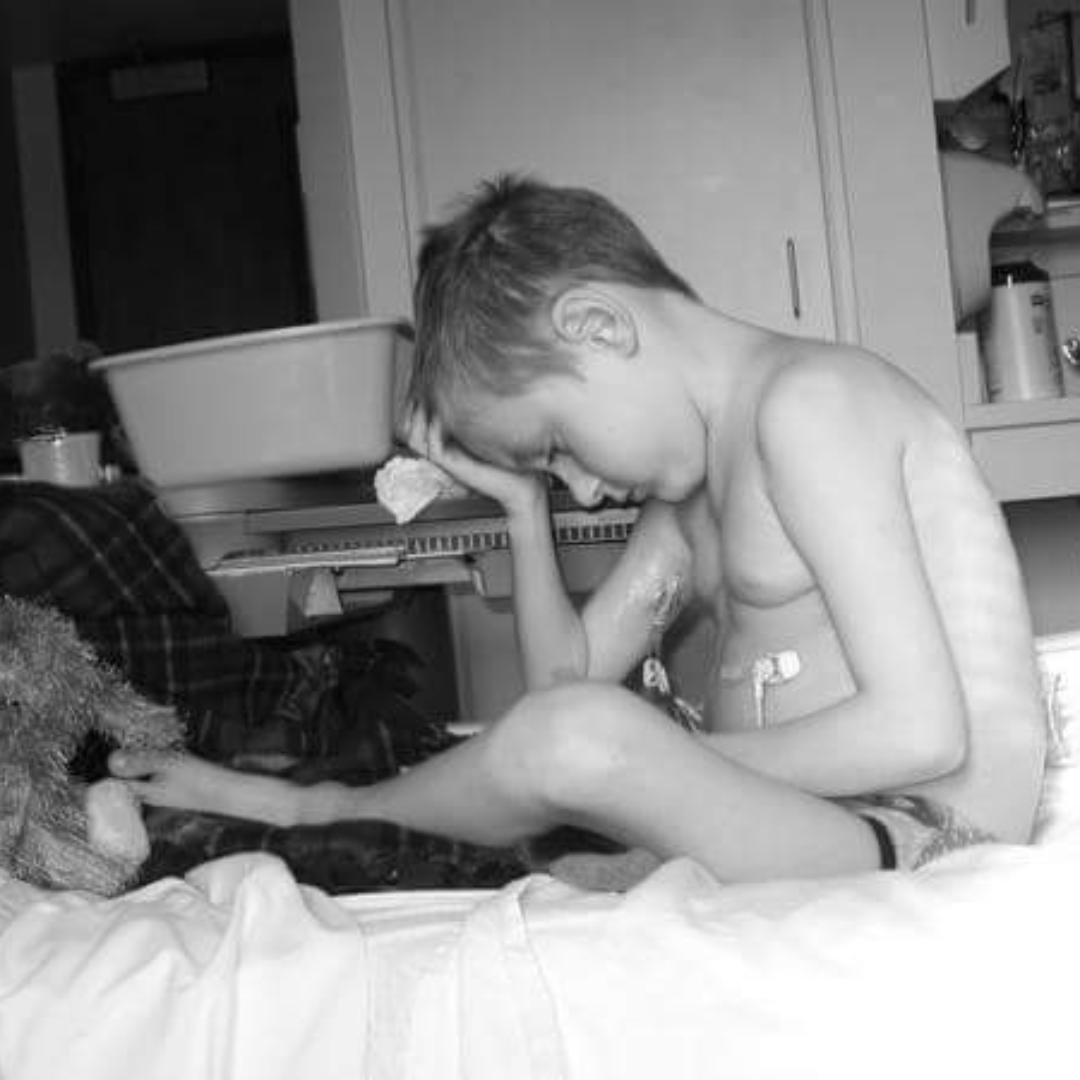
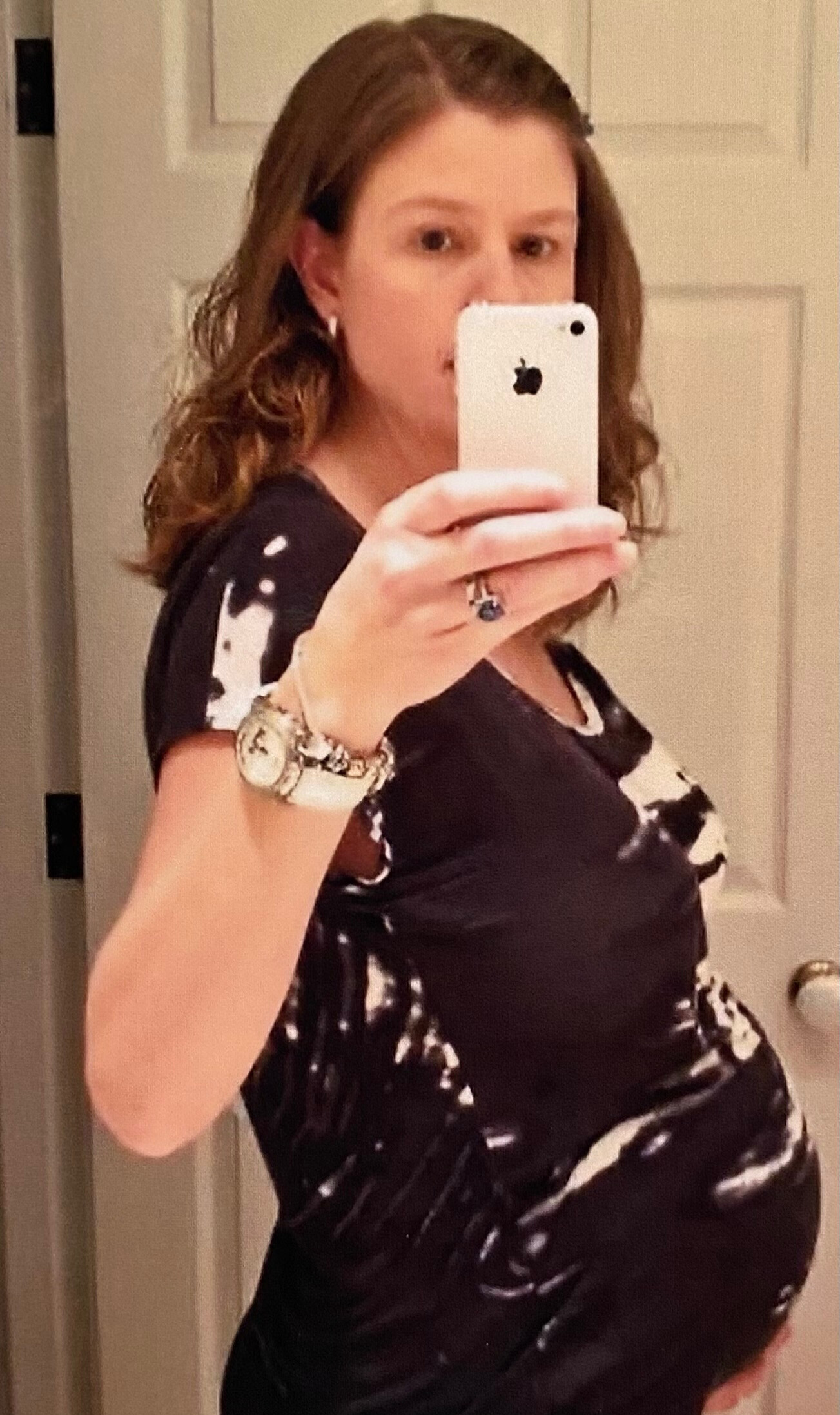
In 2011, I was pregnant with our second child when my otherwise healthy, 35-year-old husband developed flu-like symptoms. He went to work and went about his regular life until he was too sick to get out of bed. I took care of him and slept next to him for a week until he woke up with a very distinctive rash one morning.
He dragged himself to our family doctor, who said if he didn’t know any better, he would think it was measles. Our doctor, in his 50s, had only ever seen measles in textbooks, thanks to the extremely effective and safe MMR vaccine, which had eliminated it from our country. My husband was sent home, where he kept deteriorating.
He became so ill that he was eventually hospitalized. It was a horrible experience, with him being the sickest he had ever been, while doctors and nurses were coming into his room in hazmat suits. Meanwhile, I was at home, pregnant and stressed, having been exposed to an unknown, very serious illness.
His bloodwork came back, confirming it was measles. I remember being confused (no one got measles in Canada in 2011!), but also relieved because I knew I was fully protected, along with my unborn baby and toddler.
If this had happened two years earlier, I would be telling a very different story. In my 2009 pregnancy, my titres were checked, as was standard procedure in Canada. I was shocked to find out I did not have protection against measles. I even called my mom after the results and accused her of not vaccinating me. She insisted I had been vaccinated, and my records confirmed this, showing MMR vaccination when I was 12 months old.
Since the MMR vaccine is a live vaccine, you cannot receive it in pregnancy. The doctor told me to get a booster after I gave birth. I waited until my daughter received her MMR vaccine at 12 months since I was still breastfeeding her. I remember feeling silly asking for an MMR booster, since no one got measles anymore in Canada. I received my MMR booster on September 27, 2010, having no idea my husband would fall terrifyingly ill and be hospitalized with measles only one year later.
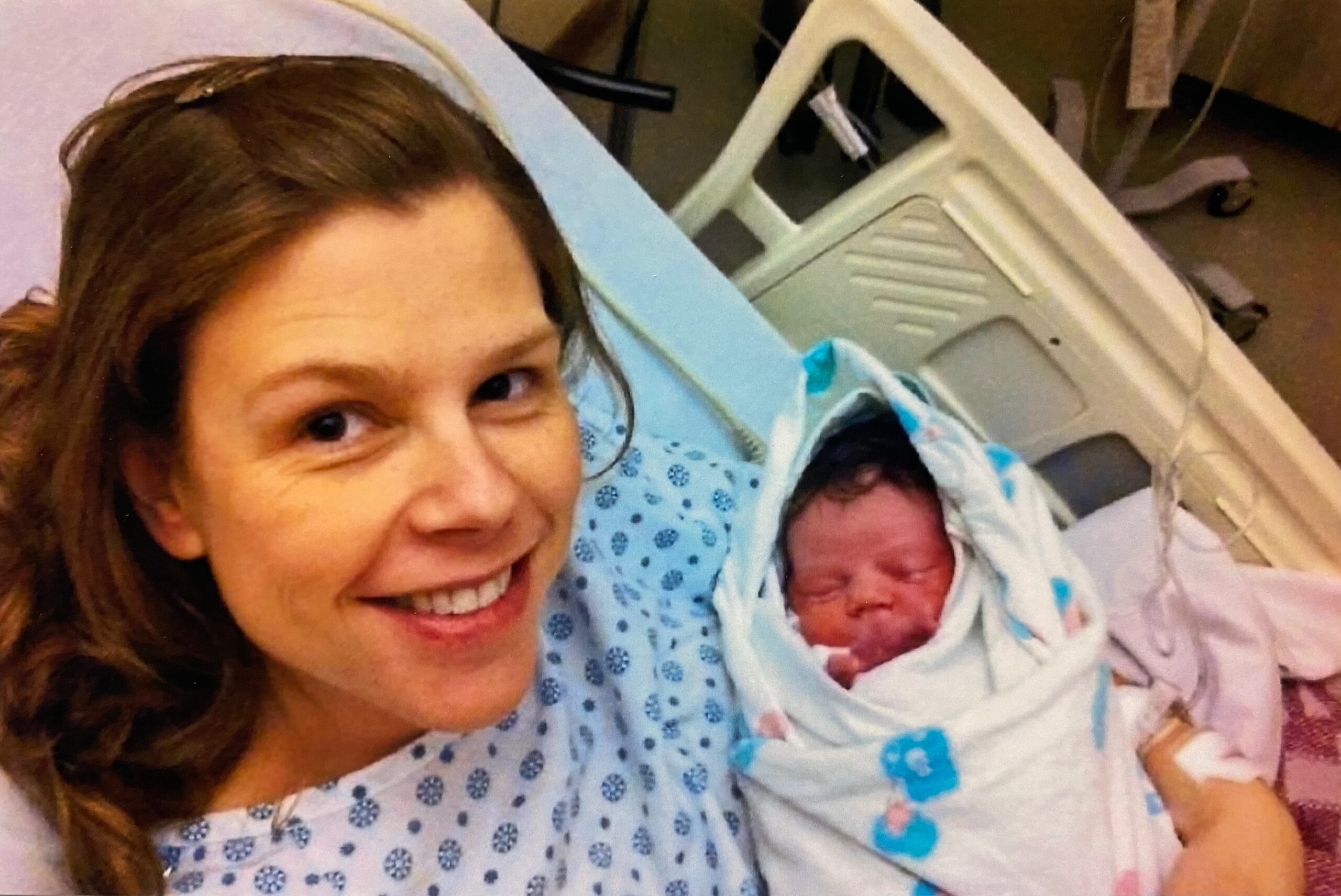
Measles, mumps, and rubella can be very dangerous in pregnancy, increasing the chance of stillbirth and severe birth defects. Just last month, in my home province of Alberta, a premature baby born to a mother who contracted measles during pregnancy died shortly after birth.
After my husband recovered from measles, we learned some terrifying information about how dangerous it can be. We read about immune amnesia, a condition where the virus erases the immune system’s memory of past infections and vaccinations, making a person temporarily vulnerable to other diseases.
We also learned about subacute sclerosing panencephalitis (SSPE), a form of progressive brain inflammation caused by a persistent infection with the measles virus. The condition disproportionately affects young unvaccinated children, is one hundred percent fatal, and can occur up to a decade after measles infection. In September 2025, a child in Los Angeles died of SSPE years after their measles infection. I was so grateful that we had vaccinated my daughter right on schedule at one year old, just months before she would be exposed to the virus.
For this reason, I am very outspoken against the recent trend of delaying or “breaking up” vaccinations. If we had done this, my daughter likely would have contracted measles and could have been at risk of many serious complications. I don’t know how you can safely decide which virus you think your child won’t be exposed to for a few more months or years.
My husband and I both had records of our MMR vaccination at one year old. So how did we both end up not protected against measles? After his illness, and my bloodwork showing no titres against measles, we discovered that children in the 1970s and 1980s in Canada only received one dose of MMR. This later proved to leave some people without lifelong protection, so a second dose at five years old was added to the schedule.
When measles affected our family in 2011, my husband’s case made the news because it was so unusual. I can still find the article in The Edmonton Journal, published on November 15, 2011, listing the locations he had been while likely contagious, warning others of a possible exposure.
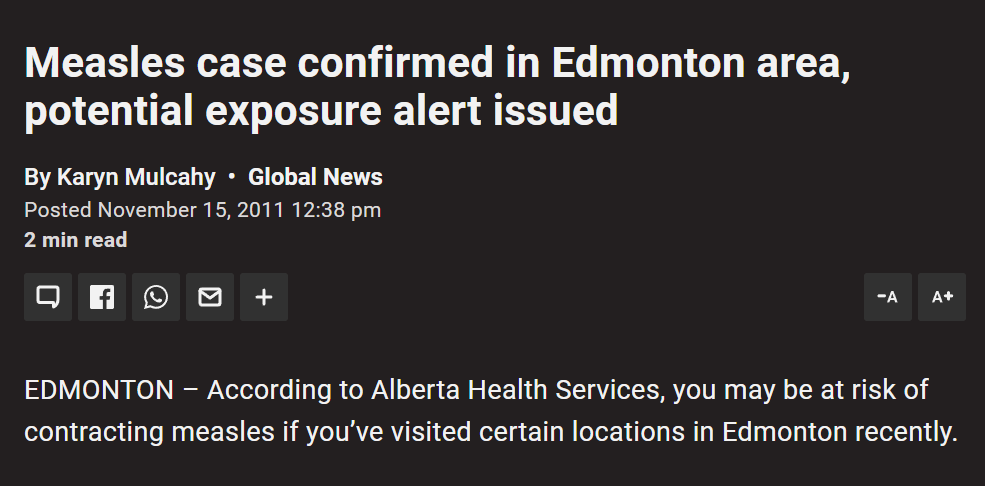
Fast forward to today, and Alberta is experiencing a major measles outbreak, with almost 2000 Albertans–almost all unvaccinated–having contracted measles since March.
If you had told me this would happen back in 2011, when my husband was the only confirmed case, I would have never believed that anti-vaccine rhetoric would cause people to stop vaccinating their children with a very safe, very effective vaccine that has been around since the 1960s.
I have no doubt that an MMR booster on September 27, 2010, saved myself, my unborn baby, and my toddler from the frightening illness and hospitalization my husband experienced, or worse, stillbirth, birth defects, or SSPE for our toddler. If measles could impact our family in 2011, it can definitely impact yours today.


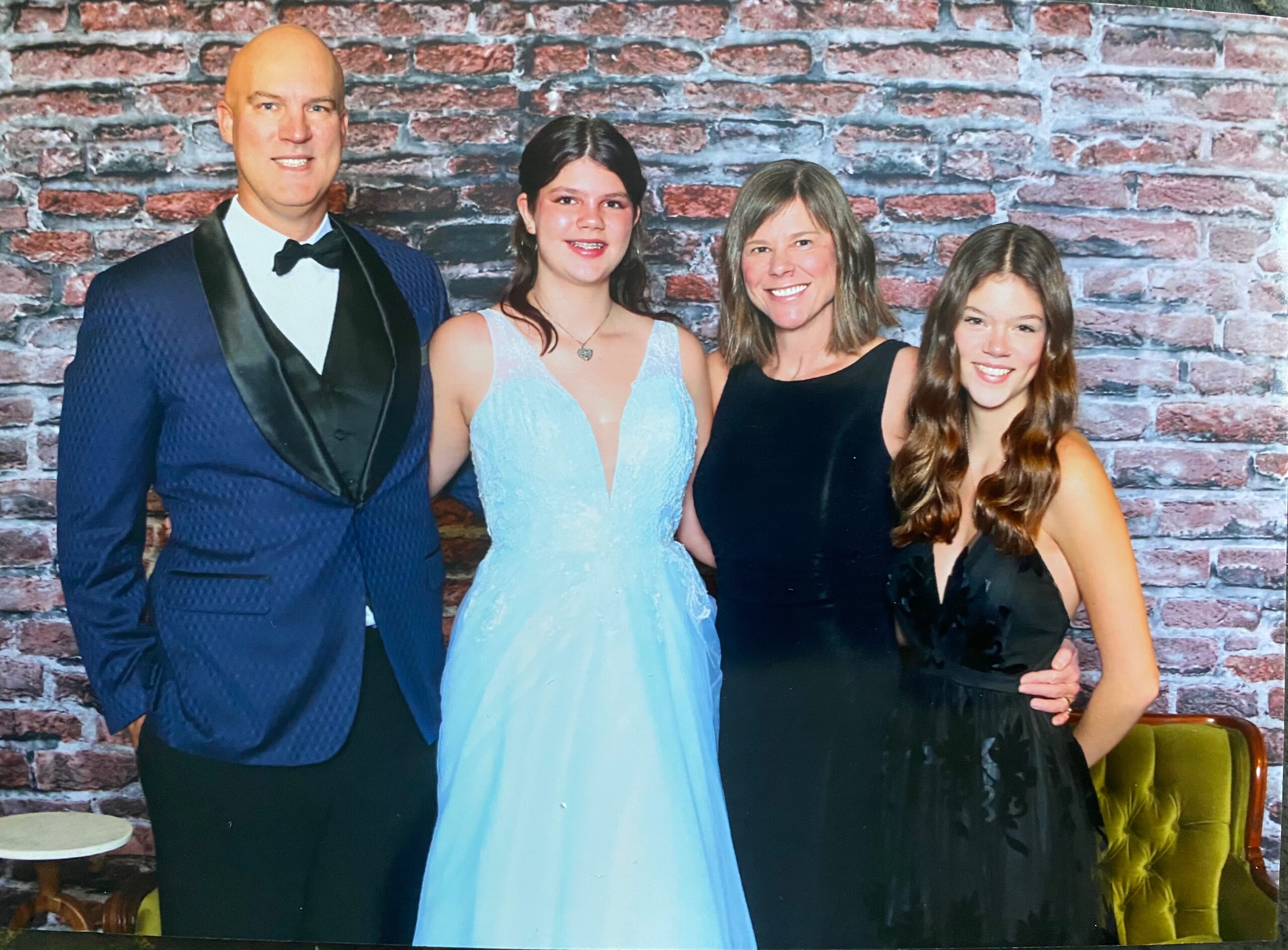
Sonia Kirby, her husband Tim, and their two teenage daughters live in Edmonton, Alberta, Canada. Her story, like all others on this blog, was a voluntary submission. If you want to help make a difference, submit your own post by emailing us through our contact form. We depend on real people like you sharing experience to protect others from misinformation.