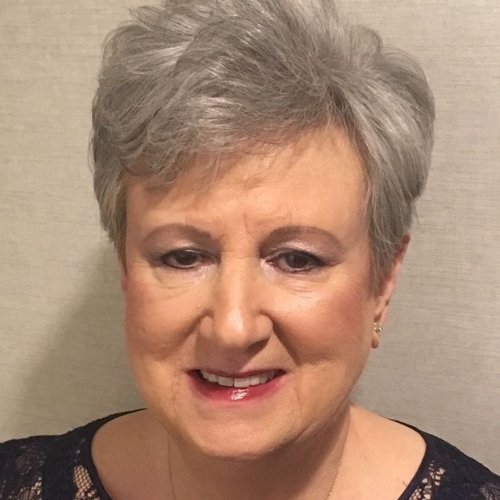
by Lynne Sandler
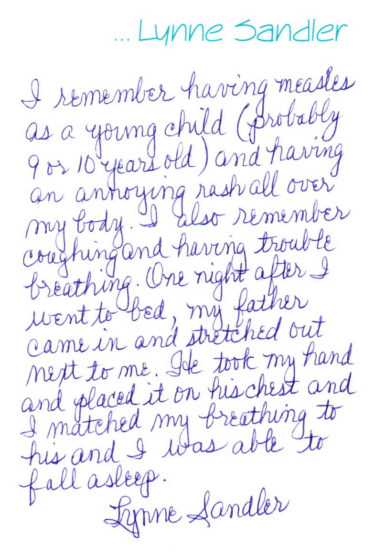
Two things have stayed with me from childhood. The first is a memory: I was sick with measles and struggling to breathe. My father took my hand and placed it on his chest so I could match my breathing to his until I was able to sleep.
The second is a pair of silver candlesticks. They tell a harder story.
Growing Up Before Vaccines
In the 1940s, getting sick was just part of childhood. Measles and mumps spread through our elementary school, and there was nothing much anyone could do. You got sick, you rode it out, and you hoped for the best. My brother and I contracted both measles and mumps. Mumps was bad. Measles was worse.
I was probably nine or ten years old when I had measles. I remember an annoying rash all over my body, and coughing, and having trouble breathing. One night I had so much respiratory difficulty that my father had to help me control my breathing. I was in bed, and my father stretched out next to me. He took my hand and placed it on his chest. I matched my breathing to his, and only then was I able to fall asleep. My parents must have been very scared. Luckily, I pulled through without any lasting repercussions.
The treatments available were not exactly modern medicine. Mumps was treated with oil-soaked flannel wrapped around our necks. This was no fun! And now I know it likely had no effect on the illness.
The Best Medicine Had to Offer: A Sign in the Window
Quarantine was another avenue of attack. When we had the mumps, a school nurse came and put a sign in our window warning the neighbors. It wasn’t a strict quarantine. I remember that my father was able to leave to go to work every day. But restricting contact was the best public health officials could offer at the time to stop disease spread.
Throughout history, national leaders have resorted to quarantines when there was no other way to control a rampaging disease. In 1916, when polio struck New York, authorities forcibly separated children from their parents and placed them in quarantine. But quarantine enforcement was not equally administered. Wealthy parents were allowed to stay with their children in their larger houses.
Quarantines can prevent a pathogen from infecting others. But as we saw during the COVID-19 pandemic, they come with serious financial, social, and psychological costs. They were never a solution. They were a last resort.
The Candlesticks
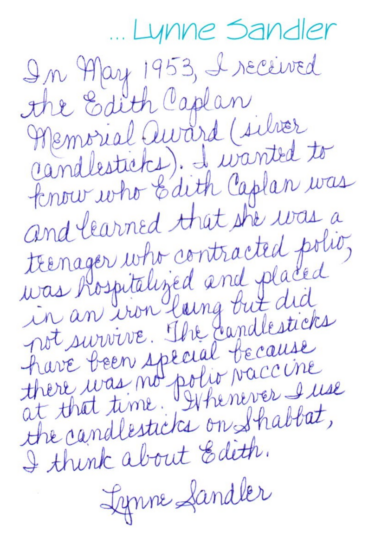
In May 1953, I received the Edith Caplan Memorial Award: a pair of silver candlesticks. I wanted to know who Edith Caplan was.
She was a teenager who contracted polio, was hospitalized, and placed in an iron lung. She did not survive.
The candlesticks have been special to me ever since, because when Edith Caplan got sick, there was no polio vaccine. Whenever I light them on Shabbat, I think about Edith. I think about what it meant to live in a world without the vaccines we now take for granted.
Finally, a Better Answer
Public health officials tried their best to protect children from diseases like measles and mumps in the 1940s. But nothing really worked effectively. Kids still got sick—sometimes really sick.
Then vaccines became available, and we eagerly lined up to get them.
After the measles vaccination program began in 1963 and the mumps vaccination program started in 1967, there was a more than 99% decrease in both diseases in the United States. Thank goodness.
I still think about how I struggled to breathe with my hand on my father’s chest. My Edith Caplan candlesticks are still on my Shabbat table, reminding me of a teenage girl who never got the chance to grow up. Every time I use those candlesticks, I think of Edith.
We are so fortunate to have vaccines today.


Lynne Sandler and her husband Don have lived at Greenspring Retirement Community in Springfield, Virginia, for the past four years. Prior to that, they lived in Alexandria, Virginia. They have two daughters, three grandchildren, and one great-grandson. Lynne’s story, like all others on this blog, was a voluntary submission. If you want to help make a difference, submit your own post by emailing us through our contact form. We depend on real people like you sharing experience to protect others from misinformation.