by Britt Tan
I can’t precisely recall my first memory of her. I was probably around five, and like most of my earliest memories, it’s jumbled. More like a dusty polaroid album with a handful of short, hazy video clips. I remember being afraid of her, and knowing fear was wrong. Walking over to the white couch where she lay. Staring with the odd fascination a child has for a body that appears broken—a cabinet of curiosities, failing to process the gravity of her medical condition.
This woman was my aunt. My mom’s older sister Jackie.
A Perfect Beginning
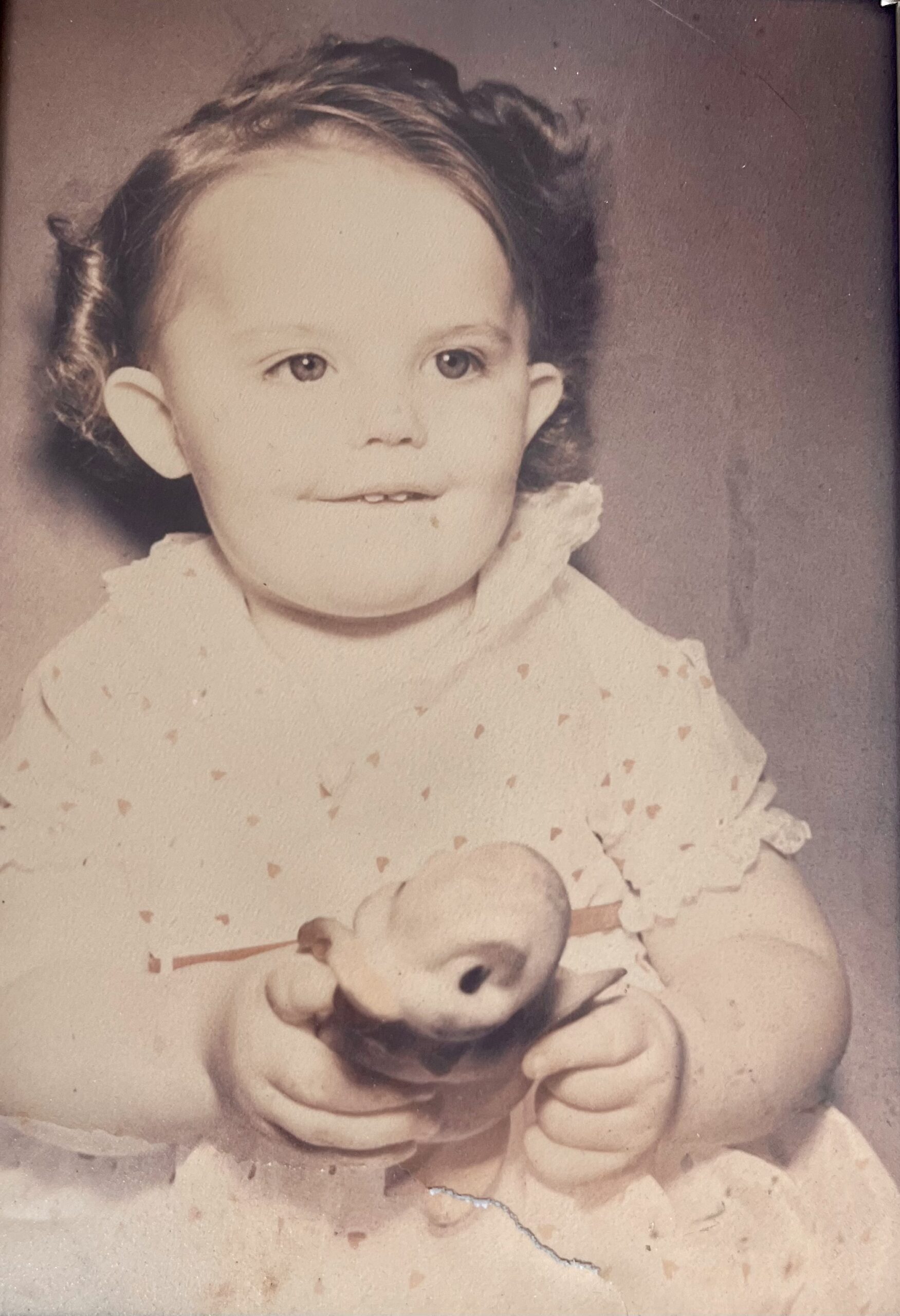
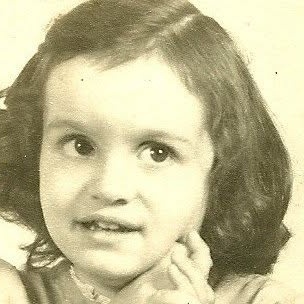
Jackie was the first grandchild and my mom’s only sibling. She is adorable in the early photographs—smiling, curly-haired, innocent, perfect. Born perfectly healthy on July 19, 1953, in Rocky Mountain House, a rural town in Alberta, Canada, hours from the urban centers with their medical advancements.
And then the photographs become far fewer. The physical changes are apparent. Going through them, the progression is hard to watch.
It happened when Jackie was four years old. Like many children of the time, she contracted measles. There was no prevention; no cure. Parents just had to ride it out and hope their child made it through unscathed. My grandparents weren’t so lucky.
The measles infection infiltrated Jackie’s central nervous system, causing encephalitis. The severe swelling of her brain left permanent damage. At first, she walks. But later she is bedridden, her movements impaired by the damage from the illness. My grandparents’ sweet, innocent, beautiful four-year-old daughter would never be the same. The happy life they imagined with their two daughters evaporated.
The prognosis was terrible. The doctors told my grandparents she would die before the age of ten. They faced a grim ultimatum: take her home without any support, or banish her to the Michener Centre, an institution an hour away that segregated people with physical and intellectual disabilities. They took her home.
It would be another six years before the measles vaccine was officially approved in Canada. Physiotherapy was unavailable in a town as small as Rocky Mountain House. Physically and mentally disabled children were hidden away. Inclusion was non-existent. In a world without vaccines, without rehabilitation, and with a brain ravaged by damage, Jackie’s motor skills declined. She was no longer able to walk. Her muscles atrophied as the days ticked by. She wasn’t supposed to survive.
She Was a Fighter
But Jackie defied her prognosis. Her mind stayed sharp. She was witty. She loved her nieces and nephew. People loved her. Animals loved her. She liked the Oilers, soap operas, and the British Royal Family—Princess Di was her favourite.
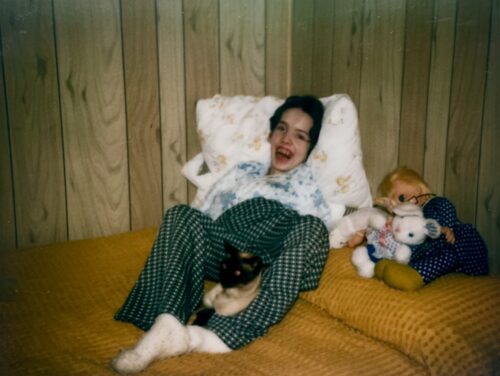
Her treasure trove of collector Barbies was extensive and immaculate. Not even a temptation to open one, as her hands and arms were incapable of the movements we able-bodied take for granted. Those Barbies stayed in their boxes, not a hair out of place, frozen in time.
They were like her. Forever confined.
By the time Jackie passed, when I was nine, I mostly understood why she was that way. The fear of my earliest memories was replaced by later experiences of her kindness. I envied her Barbies. I watched my grandma dote on her lovingly. And I felt the particular pity of seeing someone with a damaged body—a reminder of my own fragility.
The Life Around Her
My Aunt Jackie lived to be 43 years old. I don’t want to diminish the life she lived or the love she received. But her life was full of hardship. Most of it was spent on that couch, under the care of my grandparents. Her body was broken. She couldn’t move and was completely dependent on others.
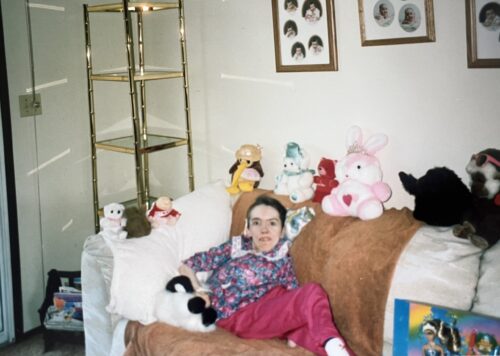
My mom was effectively an only child — the healthy one, the normal one, the other one. She also didn’t know a normal childhood. She lived without the joy of a healthy sibling. She was only a year old when measles found Jackie. My mom was taking her first steps as her sister’s last steps became imminent. She watched the unyielding toll of grief and constant care break down her mother. The household was governed by a crushing despair.
When my mom took Jackie out for a walk one day, my grandparents were angry. When she taught Jackie to write her name, they were angry. It was all futile, they believed. Pretending Jackie was a normal child was a cruel illusion. Their beautiful, broken daughter wasn’t going to live.
The entire family loved the daughter and sister they had, but mourned the one they lost when measles changed the course of their lives forever. If only there had been a vaccine.
Don't Take Vaccination for Granted
My grandparents didn’t have the option to vaccinate. But every parent today does.
In a world where vaccines are questioned, misinformation abounds, and headlines are dominated by eradicated diseases reappearing due to low immunization rates, my heart breaks. I saw what measles left behind. I saw what it broke. I saw the lives it altered forever.
Don’t take the choice to vaccinate for granted.


Britt Tan, her husband Pierre, and their two daughters live in Edmonton, Alberta. Her story, like all others on this blog, was a voluntary submission. If you want to help make a difference, submit your own post by emailing us through our contact form. We depend on real people like you sharing experience to protect others from misinformation.