This story was produced in partnership with the Hep B Foundation. They previously shared Trieu’s story in the video embedded above. They’re a great resource for info on hepatitis B and advocates for people affected by it.
by Dr. Trieu Pham
I am an urgent care physician, and a hepatitis B patient who nearly died. Because I was not vaccinated as a child, I needed a liver transplant to survive.
Hepatitis B Almost Killed Me.
I grew up in Vietnam, where hepatitis B vaccines were not available until the mid-1990s. Most people born before that—people like me, like my uncle, like millions in the endemic areas across Southeast Asia and Africa—were never vaccinated. Many people contract and carry the virus without knowing it. If people never develop obvious symptoms, they never know to get screened and tested. Then, when they reach their late 40s and 50s with chronic hepatitis, they develop complications like liver cancer and cirrhosis. A lot of these people die.
My Family Has Paid the Price
I had been living in the United States for four or five years when I learned that my uncle—my mother’s older brother—had died. Liver cancer, they told me later. After that, my family got serious. Everyone got tested. We found out that multiple members of my family were living with chronic hepatitis B.
I already knew I was one of them. I was tested after moving to the US and found out I had the virus. It was a challenge to accept and for me, personally, it was scary. Hepatitis B is a chronic condition. We can suppress the virus and try to minimize complications. But we don’t have medication that can clear the virus completely. It does not go away.
I tried, for a long time, not to think about it.
I Never Thought I Would Need a Transplant
I understood the risks of hepatitis B—I am a physician, after all. But I never thought I would need a transplant.
About three years ago, I became so sick that I required continuous oxygen. My liver had stopped working well, and I had developed hepatorenal syndrome—one of the most serious complications of chronic liver disease. The only treatment is a liver transplant.
I remember thinking about life and death. I thought about how health is more important than anything else you have achieved in life. If you do not have your health, you cannot do anything. You cannot support your family. That realization changed me.
I was lucky. Because I’m a physician, I knew how to navigate the healthcare system to get to the right people. Most people back home in Vietnam don’t have that chance. Transplants are still relatively new there. I’ve heard horrible stories of people ending up with cirrhosis and cancer. If my story raises awareness and helps people understand how important prevention is, I’ve achieved my goal.
What I Know Now as Both a Doctor and a Patient
Even after a transplant, I am not free of hepatitis B. I now have a donor liver, and must take immunosuppressants and antivirals to prevent the virus that remains in my body from attacking the new liver. I will be on antiviral medication for hepatitis B the rest of my life.
Awareness starts with understanding how hepatitis B spreads. Not only through the routes people assume—IV drug use, sexual transmission; childbirth is also a major route of transmission. When a mother has existing hepatitis B virus—which she may not be aware of—she passes it to her newborn at birth. That is how it travels, silently, across generations.
I want people to know they need to get tested—and to know how important newborn vaccination is. Imagine how easy it is for someone without my knowledge, without insurance, without access to prenatal care, to never be tested at all.
The Vaccine We Already Have
There is a hepatitis B vaccine. It works. In Vietnam, children born after 2000—children who received it as a requirement—do not face what I and my generation faced. That is what a vaccine does. It ends the cycle.
In the United States, there are now efforts to weaken vaccination recommendations. I just can’t believe it. There’s really no rationale to make that change. We have immigrants arriving from all over the world, many without access to prenatal care, many carrying the virus without knowing it. Prenatal testing helps — but it is not foolproof, and not everyone can afford insurance or prenatal care.
The best protection for a newborn is a vaccine at birth. There is no second chance to give it.
If we make people feel the vaccine is not important, they will not get it. And we will go back to a public health crisis that we already know how to prevent.
What I Would Tell You
If you were born in Vietnam, Southeast Asia, Africa, or any region where hepatitis B has been endemic—please get tested. Every single person from a high-risk region should be screened. If you find out you have the condition, get appropriate medical care. If it has become chronic and significant, see a liver specialist—a hepatologist. They will guide you from there.
And vaccinate your children. Please.
If I had been vaccinated as a child like everyone born here in the US, I would not be sitting here telling you this story. I would not have needed a transplant. I would not have watched my uncle die.
The vaccine exists. Use it.


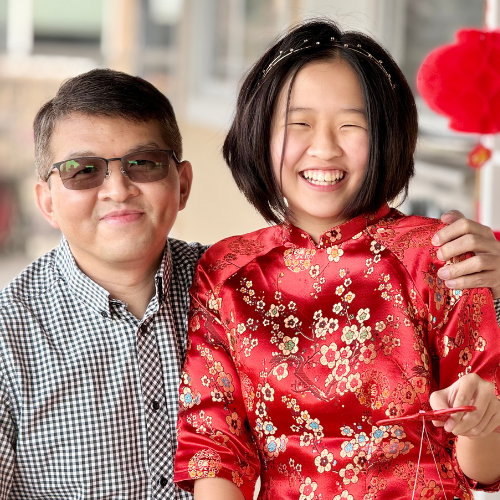
Trieu Pham M.D, his wife Van, and their three children live in Stockton, California. His story, like all others on this blog, was a voluntary submission. If you want to help make a difference, submit your own post by emailing us through our contact form. We depend on real people like you sharing experience to protect others from misinformation.
