by Lisa M. Matovcik, PhD, JD
The 1918 flu pandemic killed millions. When the coffins ran out, people turned to doors. My grandmother had carried the memory of one of those doors since her childhood. But I never knew—until she heard me cough.
The Story Revealed by a Cough
Driving my grandmother home from the shopping mall while on a semester break from college in the 1970s, I coughed the asthmatic cough of my typical post-semester-letdown bronchitis.
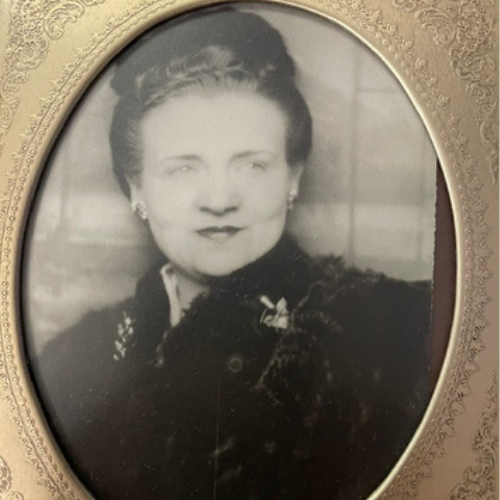
“You sound just like my mother right before she died,” my grandmother blurted out when she heard the cough.
“Oh?” I prompted her, glancing over to the passenger seat.
“So many died, so many.” Her tone told me that her memories were still vivid after all these decades. Stella Bankowski Valente, “Nunny” to me, seemed to be time traveling and lost in a memory.
“What happened?” I asked.
I knew she was talking about the 1918 flu pandemic, but had never before heard her talk about her family.
“She coughed and coughed, there was blood. The baby died too.” The words were coming slowly, in fragments.
“She had a baby?” I asked.
“Just a few days old.” Nunny made that tsking/clucking sound with her tongue that she did when something was sadly wrong.
“What about you? How old were you?”
“I was eight.”
I glanced across the front seat to her with a nod, giving a quick visual prompt to go on.
The Pieces Fell Devastatingly into Place
In halting phrases, she reminisced. “Had to take care of my two little brothers . . . so many died . . . they ran out of coffins . . . the men came and took the door off the hinges . . . they wrapped her in the sheets and carried her out on the door.”
Had she just told me there were so many deaths that there were no more coffins? Baffled, I wondered if this was true and if they could possibly have afforded a coffin even if one was available.
Nunny’s parents came from Poland and lived in Lawrenceville, which at the time was a crowded, poor, and deteriorated immigrant area. Today, it’s a thriving neighborhood in Pittsburgh. Her dad, who spoke only Polish, worked three jobs, day and night, to keep the family afloat.
“I had to quit school . . . I had no shoes.” She was in the third grade. Her elementary school girlfriends came over and shared the lessons and the news of the day. I knew she was smart; she read newspapers in both English and Italian, dotted her slang with Polish words I suspected were mild obscenities, and had sharp insight into people and situations.
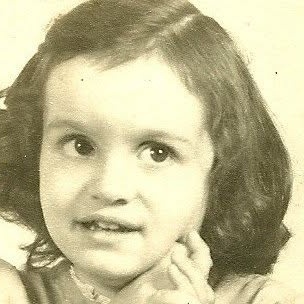
At eight years old, she ran the household, raised her brothers, shopped, cooked, and kept up the shabby wooden apartment the best that she could. Much later, she had a hand in raising me too. She was a refuge in my adolescence, and cleaned offices at night to help with my college tuition. When she passed in 1999, she bequeathed to me her lessons from a childhood ravaged by influenza.
Pittsburgh and the 1918 Flu Pandemic
In 1918, the most virulent influenza ever known swept through the United States and the world. According to the National Library of Medicine, the flu claimed nine million lives worldwide. More than 20 million died overall, including deaths from pneumonia and other flu-associated illnesses. Nunny’s Pittsburgh home was among the places hit the hardest; more than 23,000 children and adults were sickened and about 5,000 died. During the peak of the pandemic, a Pittsburgher died every ten minutes.
At the time, the cause of influenza was unknown. It was not until 1933 that the virus was isolated and identified. United States scientists developed a successful vaccine program in the 1940s; the vaccine was tested for safety and efficacy on the U.S. military, and it became available to the public in 1945.
The Door
I never forgot the door in Nunny’s past. The men coming, the hinges, the sheets. Nunny described it in fragments, the way you describe something you’ve never been able to fully put into words.
Today, we have what Lawrenceville didn’t have in 1918: a vaccine that works. My Nunny was eight years old when she lost her mother and took over a household. The least I can do today is roll up my sleeve. I hope you will too.


Lisa M. Matovcik, PhD, JD, is a Pittsburgh native who now makes her home in Washington DC. She began her career as a scientist, led a research lab, then transitioned to biotechnology patent law. She is a lifelong runner and loves being outdoors, reading fiction, and watching baseball.
Lisa’s story, like all others on this blog, was a voluntary submission. If you want to help make a difference, submit your own post by emailing us through our contact form. We depend on real people like you sharing experience to protect others from misinformation.