“Love thy neighbor as thyself” (Mark 22:39).
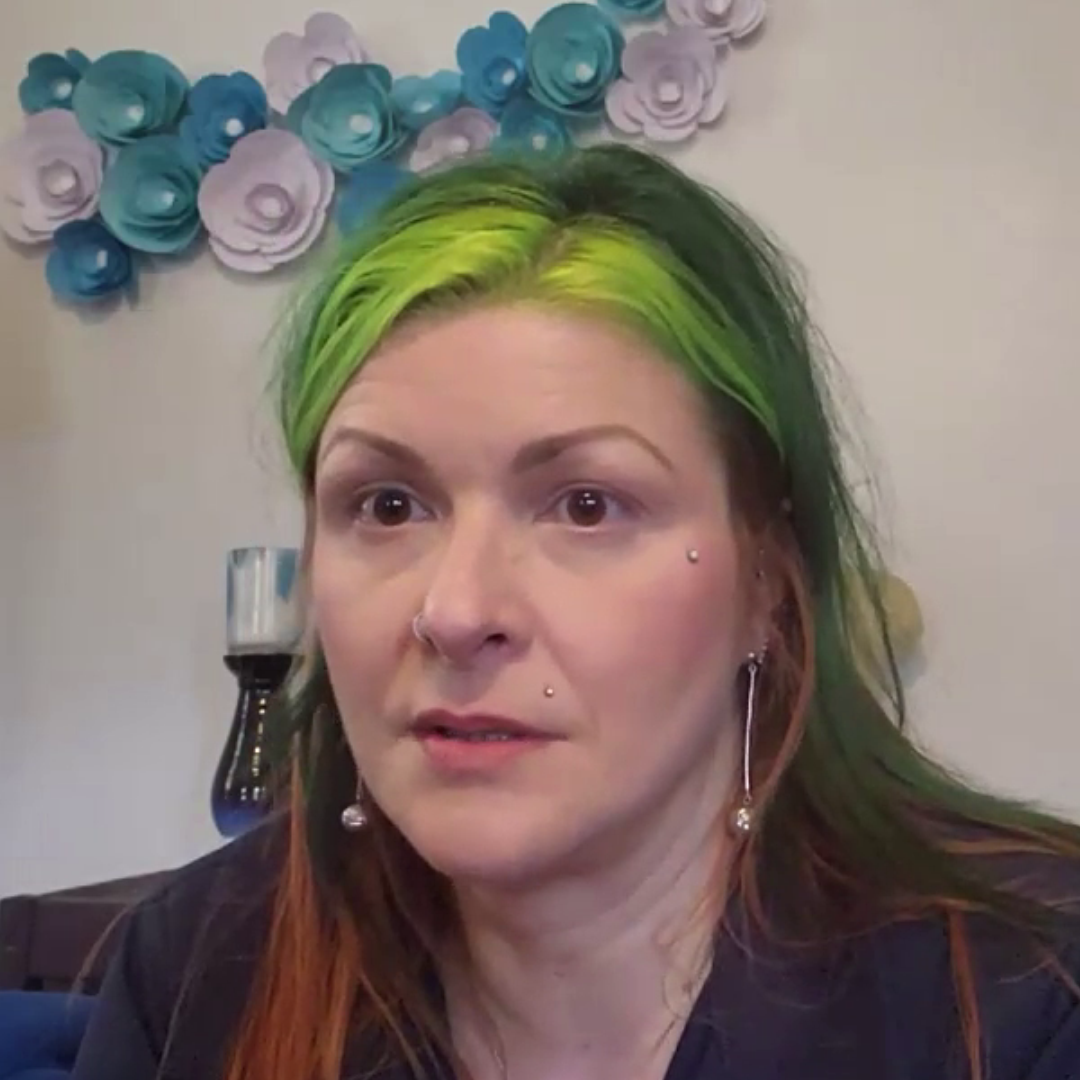
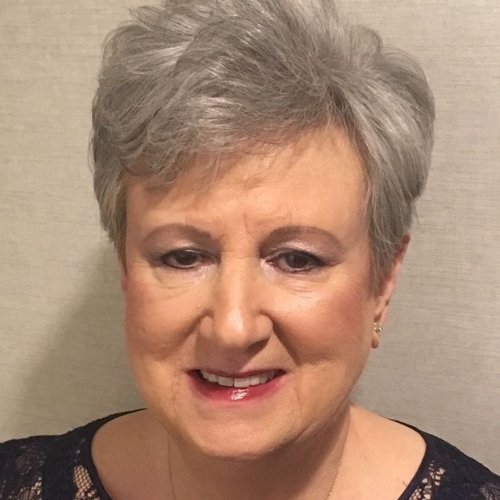
This foundational teaching of the Bible can be applied to many areas of life, including public health. Voices for Vaccines hosted a webinar with three faith leaders on how vaccination and religion can complement one another. The conversation was put together in partnership with Kansas Interfaith Action and the Immunize Kansas Coalition, based on their Love Vaccinates initiative.
Bishop Donna Simon, Fifth Bishop of the Central States Synod of the Evangelical Lutheran Church in America (ECLA), opened the discussion by pointing to the story of Cain and Abel. After killing his brother, Cain asks God: Am I my brother’s keeper?
“Every generation who has read those words has known that God’s answer is in the affirmative,” said Simon.
Immunizing to protect your neighbor is right in line with scripture
She also pointed to Jesus’ summary of the commandments in Mark Chapter 22, where He tells his followers to love God above all else, and also to love one’s neighbors. To Simon, this means that we have to care for the well-being of others. Immunizing to protect your neighbor, who may be immunocompromised or at-risk, is right in line with scripture.
Pastor Carl Frazier, who ministers at the New Hope and Love Community Church in Topeka, went on to stress that our health is what allows people to serve God. “How can you worship God if you’re not well?”
Frazier echoed the biblical teaching that one’s body is a temple. We have a duty to take care of our own temple, which means getting vaccinated for ourselves and also protecting our brothers and sisters. Frasier also mentioned that the recently applied public health concept of a quarantine is found all the way back in Leviticus.
Monseigneur Stewart Swetland, the 7th President of Donnelly College in Kansas, took on the question of whether vaccination is acceptable to Christians, given the use of fetal stem cell lines to make them.
Swetland made clear that the cell lines used to invent and manufacture vaccines are not directly tied to abortion. Rather, these stem cell lines were derived from two elective abortions performed in the 1960s. As we’ve discussed here, these cell lines, called “descendant cells,” help make vaccines safely. Vaccines do not contain the descendant cells, since the cells are used only to grow the weakened virus, without contamination by nonhuman cells. They also keep growing in the lab, so scientists can still use them today. No new fetal cells are needed to make vaccines.
The Catholic Church has well-developed teachings on this topic. Swetland says that he knows firsthand the harm diseases can do to the unborn, since he was part of a rubella outbreak as a child. Rubella is a disease that causes birth defects and stillbirths when a pregnant person catches it. It caused tens of thousands of those complications every year in the United States before there was a vaccine. Swetland says the good of preventing this (and other vaccine-preventable illnesses) outweighs the harm of using those stem cell lines.
Love your neighbor through immunization
Bishop Simon reiterated the theme of loving one’s neighbor. She references Proverbs 3:27: “Do not withhold good from those to whom it is due, when it is in your power to act.” This proverb gives us a sense of agency. We should not just want what is best for our neighbor, but also help to bring it about.
The parable of The Good Samaritan furthers this point, making clear that our neighbors are not just those who we agree with or find likable. Everyone is our neighbor. And since everyone can contract diseases, we all have an obligation to help prevent its spread.
Naturally, the faith leaders led us to the topic of vaccine equity. Pastor Frazier shared that during the pandemic, public health officials often expected people to come to them rather than going out into underserved communities. When he himself went to get his COVID vaccine, he walked in and wondered: “Where are the Hispanics? Where are the African Americans? Why are all these people white?”
“There were people who [attended] Church the week before and died that next week of COVID. And so it’s not like people weren’t trying to get the shot. They just didn’t have access,” Frazier said.
As community leaders, each faith leader wanted to set an example for those they reached. Monseigneur Swetland explained that’s why he got the vaccine in a public setting, on video. “As did my Archbishop, known for his strong pro-life positions…he allowed himself to be televised receiving the shot, to show that we trusted that it was safe, and thought that it was moral to get the shot.” He also notes that churches can be a great place to host flu shot clinics.
The only way that the community was going to be together was if all of us got vaccinated
Bishop Simon thought back to the beginning of the pandemic, when churches couldn’t gather. “We were first in line,” she said of her family. “We knew that the only way that the community was going to be together was if all of us got vaccinated.”
The discussion then turned to how healthcare providers and church leaders can work together to promote vaccination in their communities.
Pastor Frazier told a story from his childhood in Arkansas. “We were poor, and we had to get a van–it was like 10 families–to go to the doctor and get vaccinated.”
“I thank God for those days, because I’m healthy now.”
Spiritual leaders, who may be more accessible to the community, rely on medical leaders to sort out the facts about vaccines so they can inform their congregations, according to the pastor. He stressed the importance of regular communication and meetings between faith and medical leaders. And he recommended that spiritual leaders take an active interest in social issues such as poverty, crime, and health. Pastor Frazier pointed to national religious organizations, which often have staff focused on specific social issues.
Bishop Simon wants people to know that many faith leaders are open to supporting public health. “There were a few that decided to make a name for themselves during the pandemic,” she said, by resisting public health. But “they’re such a tiny fraction of the faith leaders out there in the country. Don’t assume resistance.”
She extends this beyond Christians. “All faiths teach that we’re caught up in the well-being of our neighbors.”
“Shout out to Kansas Interfaith Action,” said Bishop Simon. Other states have similar organizations working across sectors to make people healthier.
Monseigneur Swetland concluded by acknowledging our obligation to protect health globally as well. “For unto whomsoever much is given, of him shall much be required” (Luke 12:48). We have ample access to vaccines here, and we ought to share that with the world.
We’re grateful to all three faith leaders who joined us for this discussion, as well as our partners at KIFA and IKC. You can learn more about how community immunity protects your neighbors here.