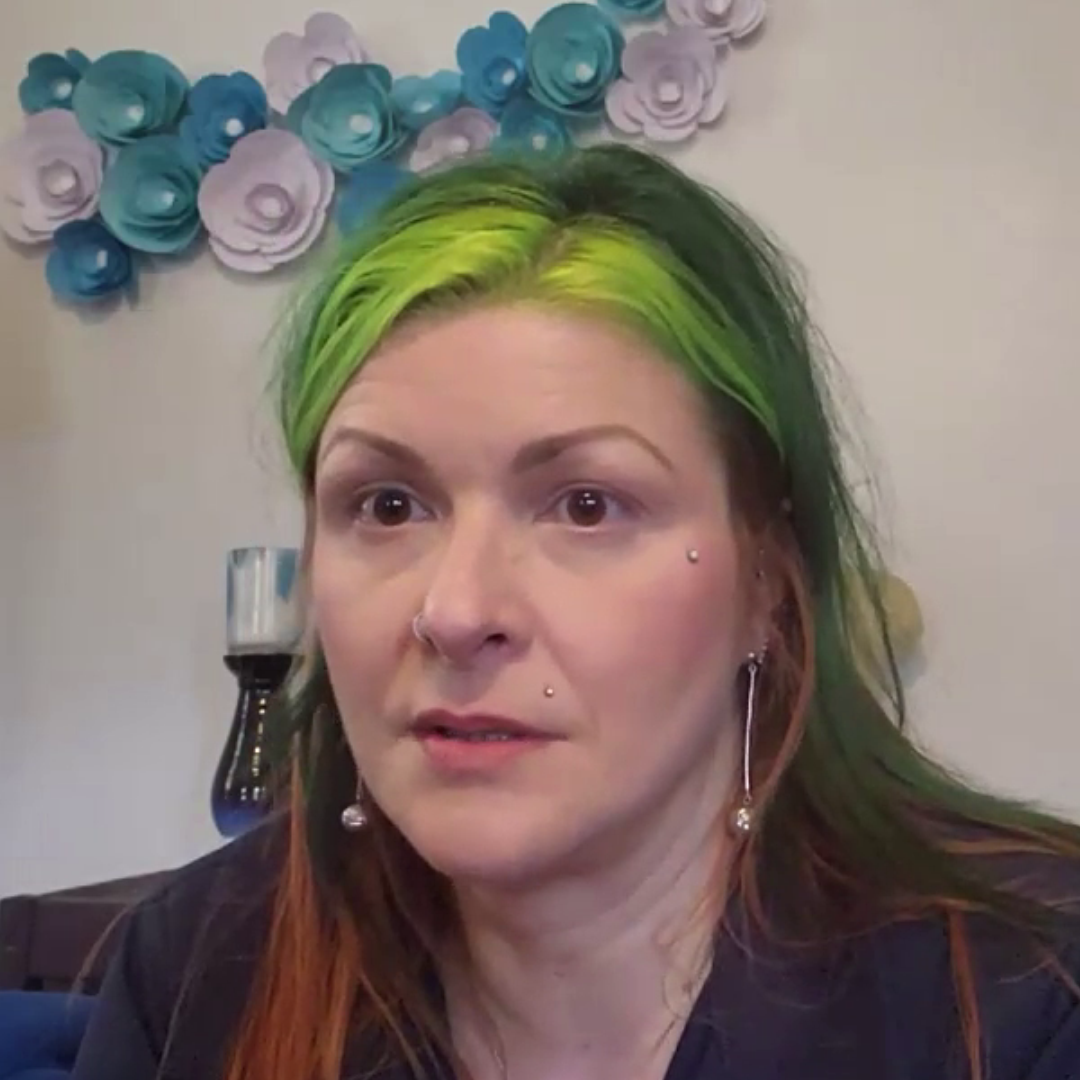
This story was produced in partnership with the Hepatitis B Foundation. DeWayne connected with the Foundation through their storyteller program, and they previously shared his story in the video embedded further down in the article. They’re a great resource for info on hepatitis B and advocates for people affected by it.
by DeWayne Walters
When I was a kid, hepatitis B put me in the hospital with a failing liver. I overheard a doctor say I’d be lucky to live past 30.
I’ll be 48 next month.
A Disease I Never Asked For
I contracted hepatitis B through a blood transfusion when I was a child. At the time, they weren’t testing donated blood for the virus. If my accident had happened four or five years later, I never would have gotten the disease.
For a long time, I was angry about that. Why wouldn’t they test the blood? But one day it hit me: if it wasn’t for that blood transfusion, I wouldn’t be here today. They did what they could with what they had. Medicine was a lot different 40 years ago.
I was diagnosed when I started showing jaundice. My eyes were yellowing and my liver was failing. In 1986, I miraculously recovered. Then, a few years later, I was put on lithium for mood swings. Lithium is processed through the liver, and my liver was already compromised. I ended up in the pediatric ward at Arnold Palmer Hospital in Orlando during one of the first years it was open. The doctors figured out it was the lithium causing my liver to fail, not the hepatitis B alone. I recovered again.
That’s when I overheard the doctor predict the life I had left. I was just a kid.
Kindness Matters When You Are Ostracized
I grew up in foster care. As a teenager, I was placed in a group home in Tallahassee called Water Oak. The nurse there knew I had hepatitis B. Eventually, so did the other kids. Kids are smart. They figure things out. They were all vaccinated. I was ostracized. They wouldn’t let me play football or other contact sports for fear I’d transmit it to someone else.
But the nurse’s daughter had hepatitis B too. The daughter was a barber, and for six to eight months, she’d come in every couple of weeks to cut my hair. She treated me like anybody else. She didn’t judge me. She didn’t look at me any different. I was happy to have someone to relate to.
Then one day, she stopped showing up. I asked the nurse what happened. She told me her daughter had passed away. Her liver had failed. She was probably in her mid-thirties.
She was the first person I ever knew who died from this disease.
Years went by. When I reached high school, a doctor cleared me to play basketball, and I joined the JV team. At that time, the stigma around hepatitis B was almost on the level of HIV. People didn’t know much about it. People were dying. The kids knew about me, and they treated me different. At one point, they threatened to walk out if the coach didn’t remove me.
But my coach, to his credit, didn’t stand for it. His name was Chico Dawkins, brother of NBA legend Darryl “Chocolate Thunder” Dawkins. He told the kids threatening to walk out that we had a student body of 3,000. If some wanted to leave, he’d just put another team together. That ended that.
Living Like I Had Nothing to Lose
When I was told I wouldn’t live past 30, I didn’t seek any other treatment. When I was young, there wasn’t much available for a kid with hepatitis B anyway. And when I was told there wasn’t much to do, I just didn’t look into it further. For a lot of years.
As I got into my twenties, I kept thinking: the clock is ticking. I took risks; I was an adrenaline junkie. I didn’t settle down. I didn’t date seriously. I wanted to experience whatever time I had on this earth and enjoy it.
My real healthcare journey with hepatitis B didn’t start until 2018. I was 40 years old.
The Question I Asked Before Anything Else
In 2010, I met my wife. I knew that if things were going anywhere, I’d have to tell her. So, I asked her a simple question first: Have you been vaccinated for hepatitis B?
She said yes.
So, I told her I had it. I said, are you good with that?
She said she didn’t care. And she meant it. That I had hepatitis B had no part in how she felt. Everybody else I had ever told had shied away. She didn’t. We dated about eight or nine months, and our son was born in April 2013.
Finally Getting Treatment—and a Hard Choice
In 2018, I started having serious health problems again and suspected they were related to hepatitis B. I found the Hepatitis B Foundation online and connected with their storyteller program. After a medical emergency that sent me to the hospital, the foundation helped me find a specialist in Tulsa, where my wife was finishing her master’s degree.
The doctor ran tests to check my liver. My fibrosis test came back at a four: significant scarring on the liver, the highest level. That scarring put me at risk for cirrhosis and liver cancer. I remember thinking: I just want to see my son graduate high school. That’s my goal.
I started on Baraclude, a hepatitis B antiviral, and stayed on it for seven years. It worked, until it didn’t. The side effects became unbearable. The nearest specialist who could treat me was 188 miles away in Atlanta. Every appointment meant leaving at four in the morning, being there all day for blood work, ultrasounds, CT scans, and not getting home until nine at night. It would take me two or three days to recover.
I made the decision to stop treatment. I signed an AMA—against medical advice—and my doctor dropped me as a patient. I understood why. But I also know my own life.
Dignity matters to me. I didn’t want my son to see me unable to care for myself. I didn’t want to spend whatever time I have too exhausted to take him on vacation, too worn down to be present. I discussed it with my family. They were supportive.
I’m not advocating for anyone else to stop their treatment. I believe treatment helps people live longer and better lives. It just wasn’t right for me anymore. Sometimes in life, you make individual decisions because they are right for your life, even when others might make a different decision.
There is hope on the horizon. Researchers are reporting functional cures in clinical trials, with a medication on a possible path to market by 2030. I think about what happened with HIV. It was once a death sentence, and now it’s manageable with medication. I think about hepatitis C, cured in six months with the right drug. I believe we’ll get there with hepatitis B.
Why I Show Up
When my son was born, I made sure he got his first hepatitis B vaccine before we left the hospital. I told the doctor: I’m not comfortable taking him home until he gets that first dose. By nine months old, he was fully vaccinated.
Until he was fully vaccinated, I took no chances. I knew hepatitis B was transmitted through blood. If I cut myself during that time, I’d put on a band aid and then a latex glove over it. Because I wasn’t going to allow any possibility of transmission with my son. Not until I knew he was protected.
When I think about why I advocate for vaccines, I think about polio. They never found a cure. But in the United States, polio is essentially gone, thanks to the polio vaccine. The hepatitis B vaccine has been proven for over 30 years. It works. The success rate is 98 or 99 percent.
If we could bring those numbers to bear on hepatitis B the way we did with polio, we could end this disease for the next generation. That’s why I advocate for vaccination. That’s why I tell my story.
If I could save one person from going through what I’ve gone through—the hospitalizations, the stigma, the years of living like I was already dying—I’ve done my job.


DeWayne Walters lives in South Georgia with his wife Jessica and 13 year old son Charlie. He’s a father, husband to a loving wife, and a person that is living with Hep B. His story, like all others on this blog, was a voluntary submission. If you want to help make a difference, submit your own post by emailing us through our contact form. We depend on real people like you sharing experience to protect others from misinformation.